Ask a Lehigh Valley fleet manager how they choose between a repair shop and mobile fleet maintenance in Allentown, and the answer usually starts with a quote. Which hourly rate is lower? Is there a trip charge? Would the same brake job cost less across town?
Those questions deserve a place in the decision. Budgets are real, and someone has to defend every line on the maintenance report. The catch is that a quote only describes the work done to the truck. It says nothing about the hours your people spend getting the truck there, waiting on it, and bringing it home.
That gap is what the DuraFleet Allentown team wants to help you close. The five questions below judge each service option by what it costs your whole operation, not only by the number printed on the invoice.
Question 1: What Will the Work Itself Cost?
Parts, labor, diagnostics, and any service fee make up the visible cost. Mobile pricing may be structured differently from a shop's, and a shop may hold the edge on heavy, multi-technician repairs. Compare these openly. Just keep in mind that the lowest line item is not automatically the lowest total, which is why the next four questions matter.
Question 2: Who Shuttles the Truck, and What Is That Time Worth?
Every shop visit needs someone to drive the truck in and someone to retrieve it. That might be the assigned driver, a second employee, or a chase vehicle following behind. Their wages, the fuel, and the added miles all belong in the comparison. For a fleet spread from Whitehall to Emmaus to Breinigsville, those trips can matter more than a few dollars on a labor rate.
A hypothetical Lehigh Valley example
Picture a contractor running 25 vehicles out of a yard near Fogelsville. These numbers are hypothetical, chosen only to show the math. Each vehicle averages 4 shop visits a year, and each round trip to the shop ties up 2.5 employee-hours. At a fully burdened labor cost of $32 per hour:
- 25 vehicles × 4 visits = 100 shop visits per year
- 100 visits × 2.5 hours = 250 employee-hours
- 250 hours × $32 = $8,000 per year
That $8,000 covers only the labor of shuttling trucks. It leaves out fuel, mileage, and the work that went undone while those employees were driving vehicles to and from service. For the visits that could be handled on site, a good share of that labor may come off the books.
Question 3: How Long Will the Truck Be Off the Road?
Two hours of wrench time rarely means two hours off the road. Drop-off windows, bay availability, waiting on approvals, and pickup can stretch a short job into a lost day. Work performed at your location can shrink that window and lets you schedule around slower periods. It does not make downtime disappear: the vehicle still has to be made available, and some repairs simply take longer or need a facility. Count the whole stretch, not just the billed hours.
Question 4: Who on Your Team Carries the Coordination?
Someone books the appointment, briefs the driver, approves the work, tracks status, and confirms the job is closed out. Spread across a fleet manager, a dispatcher, and an office administrator, that time adds up. A provider who communicates clearly can lighten the load. A poorly organized mobile service can add to it just as easily as a disorganized shop.
Question 5: Does This Job Belong in Your Yard or in a Service Bay?
Repair shops are not the problem here. A well-equipped facility offers lifts, enclosed bays, specialty tooling, and room for several technicians on a large job. Some work belongs there, period. Mobile service solves a different problem: it moves eligible maintenance and repair work to the yard, facility, or accessible work location where your vehicles already sit.
Much preventative maintenance, along with DOT inspections, computer diagnostics, and many eligible repairs, is well suited to on-site work. Other jobs need specialized equipment or a controlled environment. Pushing the wrong job into the field can raise the cost, slow completion, and compromise the repair. So the useful question is not "shop or mobile?" It is "which approach fits this particular job?" The best choice is the one that gets the work done safely and correctly, with proper follow-through.
Putting Mobile Fleet Maintenance in Allentown Into One Formula
A straightforward way to line up the answers:
Total Operational Maintenance Cost = Direct Service Cost + Transportation Cost + Coordination Cost + Incremental Operational Disruption
Fill in each piece with your own fleet's figures. Watch for double counting: if a driver's wages already sit in transportation cost, do not count them again as lost productivity unless there is a separate, measurable loss, such as a missed delivery commitment.
This framework will not prove that mobile service always comes out ahead. Sometimes the shop is the better call. What it gives you is a fair basis for deciding.
Matching the Service to the Job
DuraFleet exists to Make Control Easier. Here, that means helping fleet managers from Allentown to Bethlehem, Easton, and Reading look past single repair tickets and consider how maintenance shapes the entire operation.
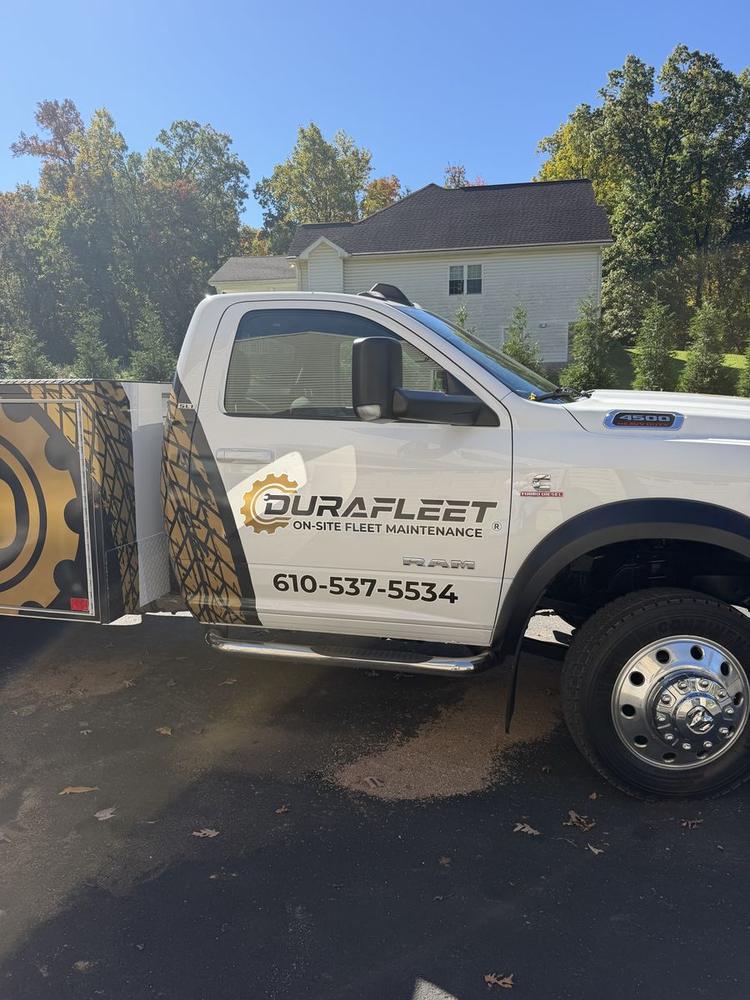
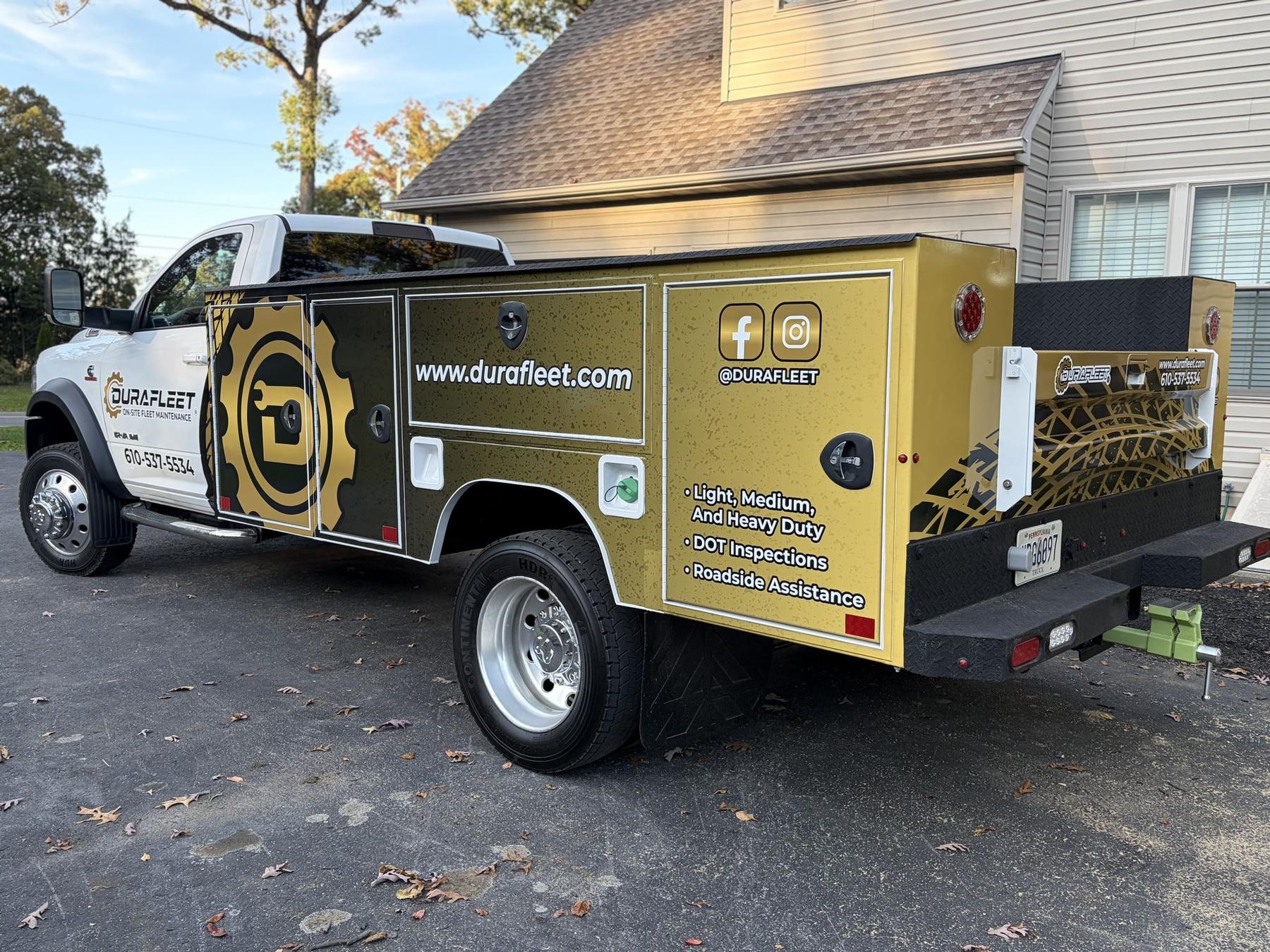
Our Allentown team can bring fleet maintenance, inspections, diagnostics, repairs, and Roadside Mobile Assistance to your location when the work can be done safely there. When a job truly needs a facility, we will tell you so and help you plan the next step.
The goal is not to commit to one model forever. It is to use the right approach for each maintenance need, at the lowest practical total cost to your business.
Compare Total Cost, Not Just Price
Are you weighing maintenance prices, or the full cost to your operation? Tell us about your vehicles and where they are parked, and we will help you sort out which services make sense on site.
Request service from DuraFleet Allentown
Anywhere Fleet Maintenance. Handled.