Fleet managers comparing mobile fleet maintenance in Phoenix with traditional shop service usually start with the repair price. Consider what that price leaves out. A construction crew truck needs routine service, a two-hour job on paper. In practice, someone drives it across the Valley to a shop, it waits for an open bay in the summer heat, the shop calls for approval on an extra item, and the truck comes back the next morning. The crew spent a day short a vehicle, and a second employee spent part of theirs on shuttle duty. None of that appears on the invoice, which is why we encourage judging maintenance by total operational cost.
Five questions make that practical. Work through them before the next truck leaves for a shop.
1. What Are You Paying for Parts, Labor and Diagnostics?
Start with what is charged for parts, labor and diagnostics. Mobile pricing may be built differently from shop pricing, including service fees or different labor rates, and a shop may be the better value for extensive repairs or jobs needing multiple technicians. Compare those terms openly. Just remember that the lowest quote does not automatically produce the lowest total.
2. What Does Delivering and Retrieving the Truck Cost?
Every shop visit needs a delivery and a pickup, usually handled by a driver or another staff member, along with fuel and mileage.
A hypothetical Valley fleet
This hypothetical example shows how quickly it builds. Imagine a Phoenix-area fleet of 70 service and delivery vehicles, each with 5 maintenance visits per year, and 1.5 employee hours to drop off and retrieve each one at a fully burdened $32 per hour:
- 70 vehicles × 5 visits = 350 visits
- 350 visits × 1.5 hours = 525 employee hours
- 525 hours × $32 = $16,800 a year
Those numbers are illustrative, not a quote or a benchmark, and they leave out fuel and other transport expenses. Run the same math with your own fleet figures. For services that can be done on-site, mobile maintenance may remove much of that cost.
3. How Long Is the Crew Without Its Truck?
Technician hours and time out of service are different measurements. Driving to the shop, waiting for a bay, getting approvals and arranging pickup can stretch a short job across a whole shift or longer.
Bringing eligible work to a yard in Tolleson or a job site in Ahwatukee can narrow that window, because the truck does not have to travel anywhere. It can also make it easier to schedule service early in the day or during a lull in the work. Mobile service is not a cure for downtime, though. The vehicle still needs to be pulled from duty while the work happens, and some repairs take longer or require a facility. What counts is total time unavailable, not hours on the work order.
A crew without its truck may mean a rescheduled job, a delayed delivery or overtime later in the week. Not every service visit causes that kind of ripple, so estimate it only where you can tie it to a real, measurable effect on the business.
4. How Many Calls and Approvals Does One Visit Generate?
Scheduling, driver arrangements, approvals, status checks and completion confirmations all consume time from managers, dispatchers and office staff. A provider that communicates clearly and keeps vehicles in place can lighten that load. One that does not will add to it, regardless of where the work happens.
5. Does the Job Call for Mobile Capability or a Full Shop?
Price means little without the right capability. Plenty of work suits mobile service well, including preventative maintenance, DOT inspections, computer diagnostics and many eligible repairs. Other jobs call for specialized equipment, a controlled environment or a full shop. The right choice depends on the vehicle, the condition, safety and the provider's qualifications.
Pushing unsuitable work into a parking lot can cost more, take longer and produce a weaker repair. Traditional shops remain essential for facility-dependent work, and a trustworthy mobile provider will tell you when a job belongs there. Desert heat is another practical factor: it is hard on vehicles, and it can affect when and where outdoor work is sensible.
Putting Mobile Fleet Maintenance in Phoenix Into One Formula
To compare options fairly, total four categories:
Total maintenance cost = direct service cost + transportation cost + coordination cost + added operational disruption
Use your fleet's actual routes, staffing and schedules for each estimate. Be careful not to double count. If an employee's wages are already in transportation cost, they should not reappear as lost productivity unless there is a distinct, measurable financial impact, such as a missed job.
This will not prove that mobile service is always cheaper. It will give you a more honest basis for choosing.
Making Control Easier Across the Valley
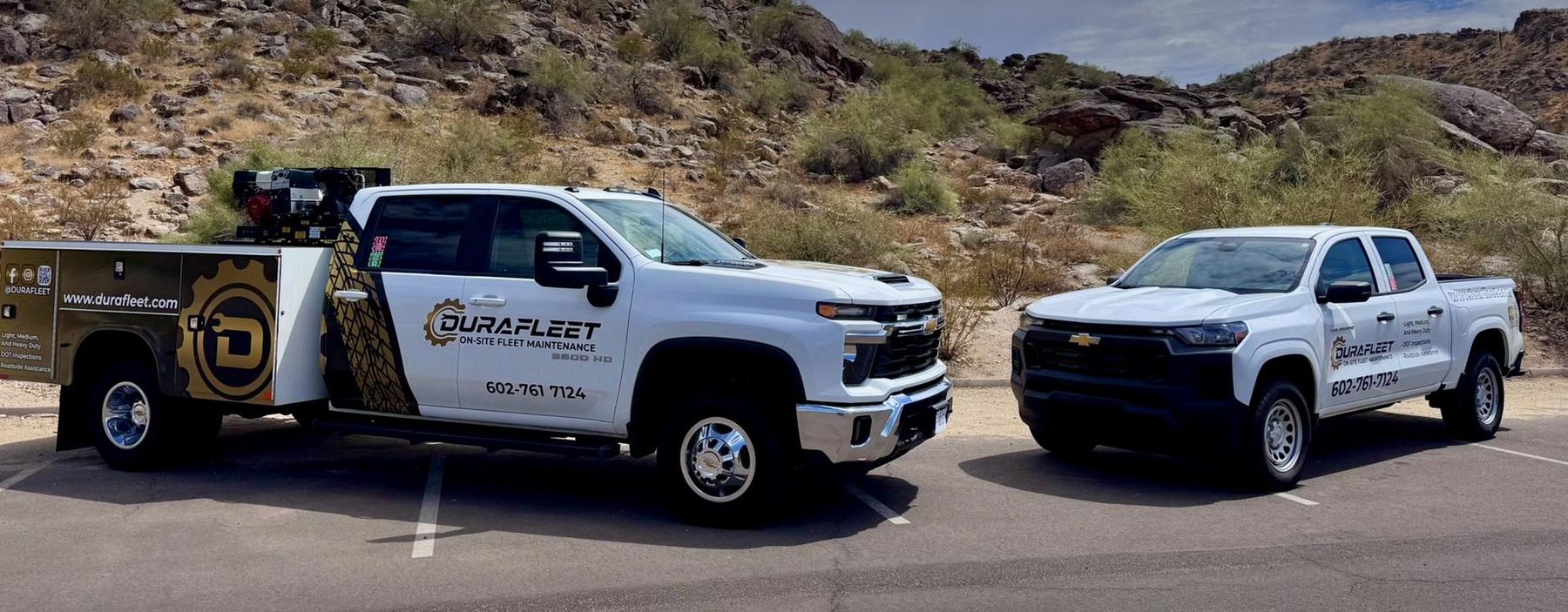
DuraFleet Phoenix supports fleets in Phoenix and nearby communities including Tempe, Glendale and Scottsdale. Our purpose is to Make Control Easier, which means helping you look past individual repair tickets to how maintenance affects the entire operation. Routine fleet maintenance performed where vehicles work can reduce unnecessary trips and simplify scheduling, while shop service handles what truly needs a shop.
The best maintenance decision is not always the smallest invoice. It is the one that delivers dependable work at the lowest practical total cost.
Anywhere Fleet Maintenance. Handled.
Talk With DuraFleet Phoenix
Are you comparing maintenance prices or total maintenance costs? Tell us about your vehicles, your sites and your schedule, and confirm coverage for your location. Request service from our Phoenix team.