How long was your truck actually gone? Not how long the technician worked on it, but how long it was unavailable to your business. For many Columbus fleets, that is the number that reveals the true price of maintenance, and it is one of five questions worth answering when weighing mobile fleet maintenance in Columbus against a traditional shop.
Fleets around Rickenbacker, Groveport, and Grove City run on tight delivery windows. Service vehicles working Dublin, Worthington, and Hilliard have customer appointments stacked through the day. In both cases, the cost of a repair includes every hour the vehicle is not doing its job. Here are the five questions, in the order we suggest working through them.
Question 1: What Does the Service Bill Say?
Labor, parts, diagnostics, and any fees are the easiest numbers to compare, and they should be compared openly. Mobile pricing may differ from shop pricing. A shop may be the more economical choice for large repairs needing heavy equipment or a team of technicians. The smallest quote, however, is not always the smallest total.
Question 2: Who Drives the Truck to the Shop, and What Does It Cost?
Each shop trip uses employee time, fuel, and mileage. Some fleets send the driver; others pull a second employee off their own work to follow along. Either way, it is a cost.
Suppose a distribution operation near Groveport runs 70 trucks. To be clear, this is a hypothetical scenario built to illustrate the math. Each truck averages 4 shop visits per year, each visit takes 2 employee-hours of transport, and the fully burdened labor rate is $34 per hour.
- 70 trucks × 4 visits = 280 visits
- 280 visits × 2 hours = 560 employee-hours
- 560 hours × $34 = $19,040 per year
That amount reflects transport labor only. Fuel, mileage, and the ripple effects on delivery windows are extra. When eligible work can be done at the fleet's own facility, much of that labor may no longer be needed.
Question 3: How Long Is the Vehicle Unavailable to the Business?
A repair quoted at two hours of labor can easily consume most of a shift. Consider what happens around those two hours:
- Someone has to drive the vehicle to the facility.
- The truck waits for a bay to open.
- The shop calls for approval, and someone has to answer.
- The work gets done.
- Someone has to go get it.
Mobile service can compress this cycle by performing eligible work where the vehicle is already parked. Delivery fleets, construction crews, and service vans across Franklin County do not share one schedule. A truck that runs overnight may sit idle by midmorning. A crew vehicle may be parked at a job site for most of the day. On-site service lets planned maintenance follow those natural gaps instead of pulling vehicles off the road during their busiest hours.
It does not eliminate downtime. The vehicle still has to be set aside for the work, and some repairs take longer or require a facility. The honest measure is total time out of service, not technician hours.
Question 4: How Much Coordination Does Each Visit Require?
Scheduling appointments, communicating with the provider, routing drivers, approving work, and confirming completion all take management time. A dependable service partner with clear communication reduces that load. An unreliable one, whether mobile or shop-based, makes it heavier.
Question 5: Can the Repair Be Done Right Outside a Shop?
Capability and quality come before convenience. Many preventative maintenance tasks, DOT inspections, computer diagnostics, and eligible repairs work well on site. Others need specialized tools or a controlled environment. Doing the wrong job in the field can raise costs and weaken the repair.
Traditional facilities remain essential. Lifts, controlled bays, and specialized equipment make certain work possible that should not be attempted in a yard. Mobile service is a complement, not a replacement. The goal is to send each job to the setting where it can be done safely and correctly at the lowest practical total cost.
Mobile Fleet Maintenance in Columbus: Building a Total Cost Picture
To compare options fairly, add up your answers:
Service cost + transport cost + coordination cost + incremental disruption = total operational maintenance cost
Plug in your own fleet's numbers. Do not count the same wages twice: if employee time is already in the transport line, leave it out of lost productivity unless a separate, measurable loss exists, like a missed delivery commitment.
The result will not always favor mobile service, and it is not meant to. It is meant to give you a decision you can explain.
Make Control Easier in Columbus
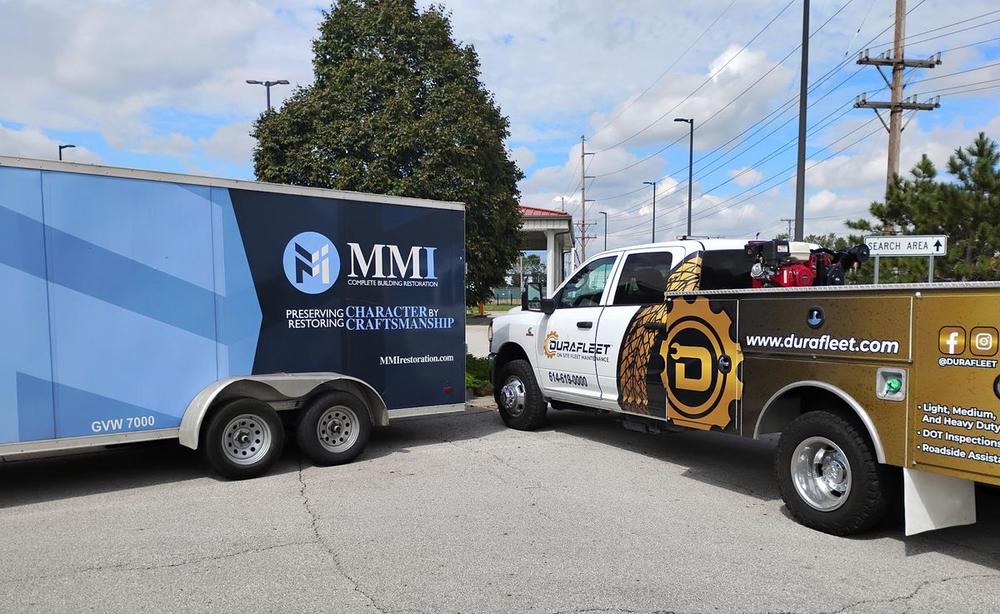
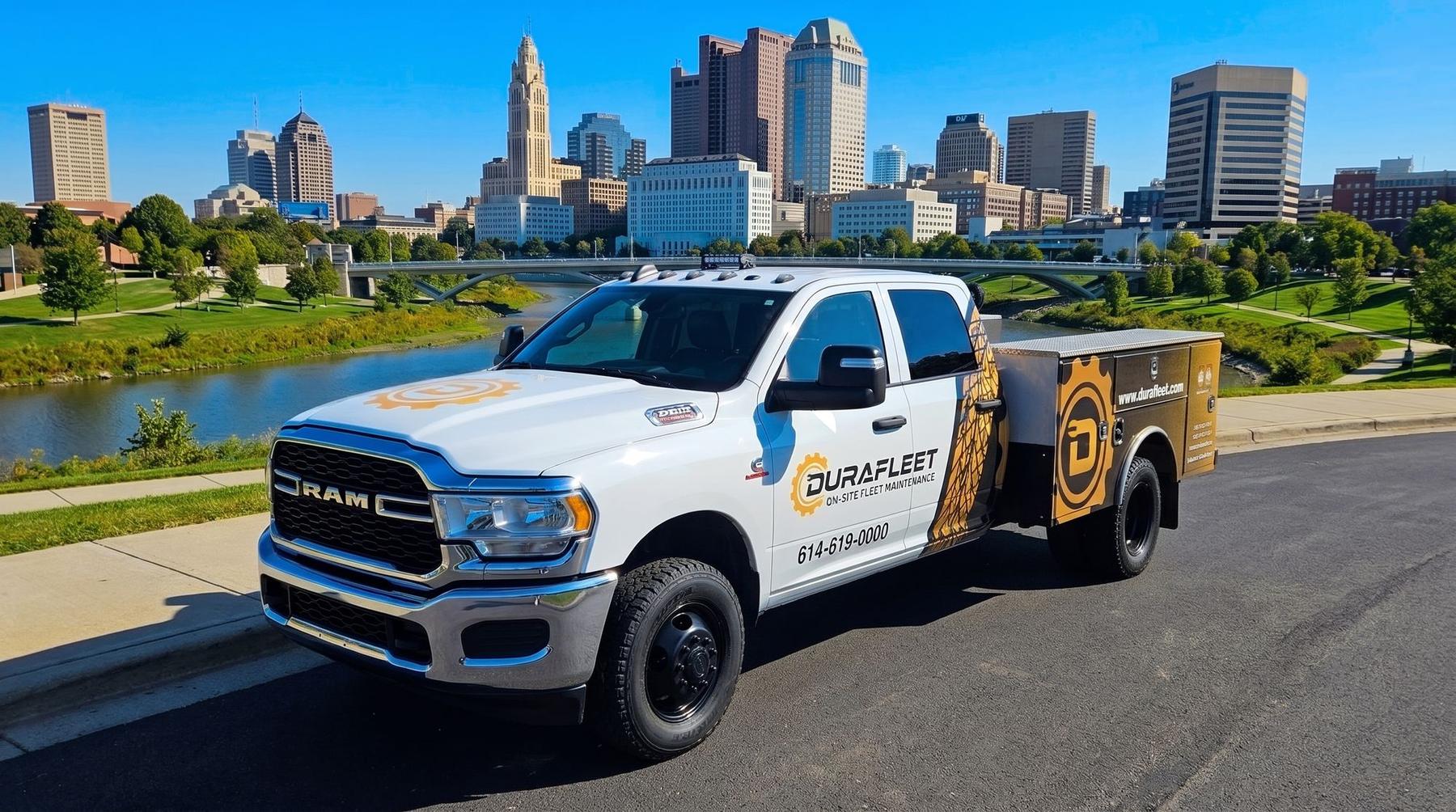
DuraFleet's purpose is to Make Control Easier. The DuraFleet Columbus team brings fleet maintenance, inspections, diagnostics, repairs, and Roadside Mobile Assistance to facilities, yards, and job sites across Franklin County, including Gahanna-area commercial corridors, Whitehall, and Canal Winchester. When a job needs a shop, we will say so and help you plan the next move.
Find Out What Can Be Done On Site
Tell us about your vehicles, your schedule, and where your fleet operates. We will help you identify the services that may be handled more efficiently at your location.
Request service from DuraFleet Columbus
Anywhere Fleet Maintenance. Handled.