Most conversations about commercial truck roadside assistance in Columbus focus on the moment of failure: the truck stops, someone calls for help, and the clock starts. That moment matters. But the fleets that handle breakdowns best tend to treat each one as the start of a loop: prepare, respond, review, and adjust. Over time, that loop makes the next roadside event easier to manage and, in some cases, less likely to happen at all.
Here is how Franklin County fleets, from Rickenbacker-area distribution operations to service crews working Dublin and Worthington, can build that loop.
The Real Disruption of a Roadside Event
When a commercial vehicle stops on the job, the repair is only one piece of the problem. A driver may be stranded. A delivery window near Groveport may close. A crew in Hilliard may be without its equipment. Dispatch has to reshuffle, customers may need updates, and the fleet manager has to figure out how to get the vehicle back to work safely. An unexpected breakdown is unavoidable sometimes. An improvised response is not.
Prepare: Put the Plan in Place Before It Is Needed
Preparation covers three things.
Driver safety procedures
Drivers should know how to stop in the safest place available, how to report a problem, and when emergency services must come before a mechanic. They should never be asked to diagnose or repair a vehicle in a hazardous location. Fleet managers need a way to decide whether a vehicle can remain where it is while help is lined up. The right response puts safety decisions first and speed second.
A standard first report
Vague reports cause delays. Ask drivers to share:
- Unit number and vehicle type
- Exact location
- Symptoms, such as no start, overheating, a fluid leak, or an electrical fault
- Dashboard warnings
- Whether the vehicle is loaded or towing
- Any immediate safety concern
Drivers do not need to know what failed. They need to give a qualified technician enough to plan a sensible response.
Clear ownership
Decide who calls the service provider, who approves repairs, who stays in contact with the driver, who decides on towing or a replacement vehicle, and who confirms the unit is ready to go back out. With those answers in place, the fleet manager is not the switchboard for every conversation.
Respond: Match the Fix to the Situation
Some breakdowns can be handled right where the vehicle stopped. A mobile technician may be able to run computer diagnostics, correct certain mechanical or electrical issues, or complete eligible repairs without a tow.
Other failures need specialized equipment, a longer repair, or a controlled environment, and some locations are not safe to work in. The decision should follow the technician's assessment and safety conditions rather than a goal of avoiding a tow at any cost. The aim is the safest and most effective route back to service.
During the event, updates should arrive at the points where decisions get made: request accepted, technician en route, vehicle assessed, field repair possible or not, parts or towing needed. That keeps dispatch informed and gives customers realistic expectations without a flood of status calls.
Review: Capture What Happened
This is the step many fleets skip. After each significant breakdown, record:
- The problem the driver reported
- What the technician diagnosed
- What was done to correct it
- How long the vehicle was out of service
- Any recommended follow-up work
A few minutes of documentation per event builds a record that is hard to get any other way.
Adjust: Use the Record to Strengthen Maintenance
Look at the log every so often. Are certain units showing up again and again? Is the same type of failure appearing across several vehicles? Would an extra inspection step or a change in preventative maintenance intervals catch it earlier? Planned work, DOT inspections, and diagnostics during scheduled service can then target what the roadside record shows.
Not every breakdown can be prevented. Learning from each one helps reduce the ones that can.
Commercial Truck Roadside Assistance in Columbus as Part of Fleet Readiness
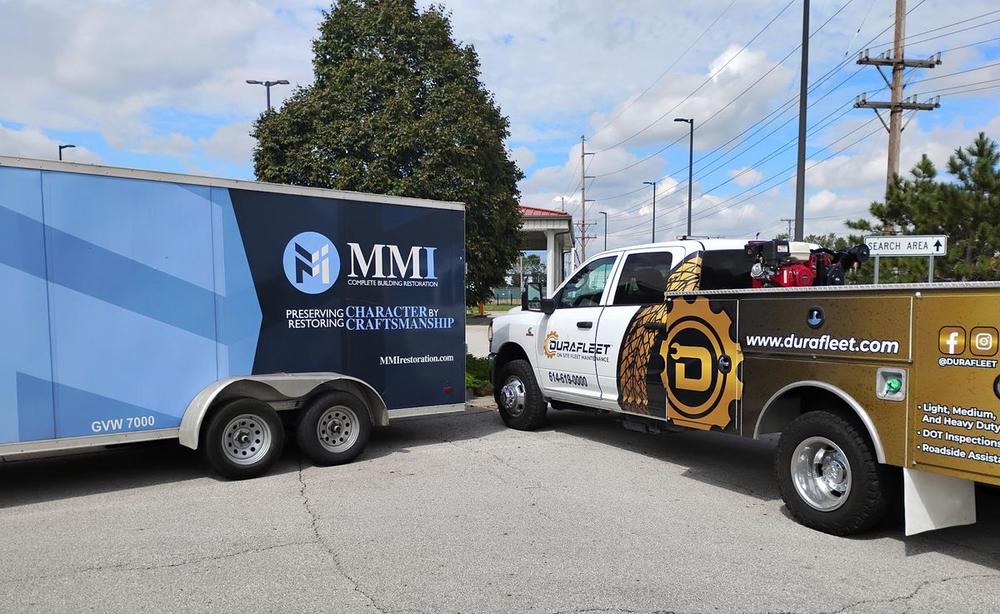
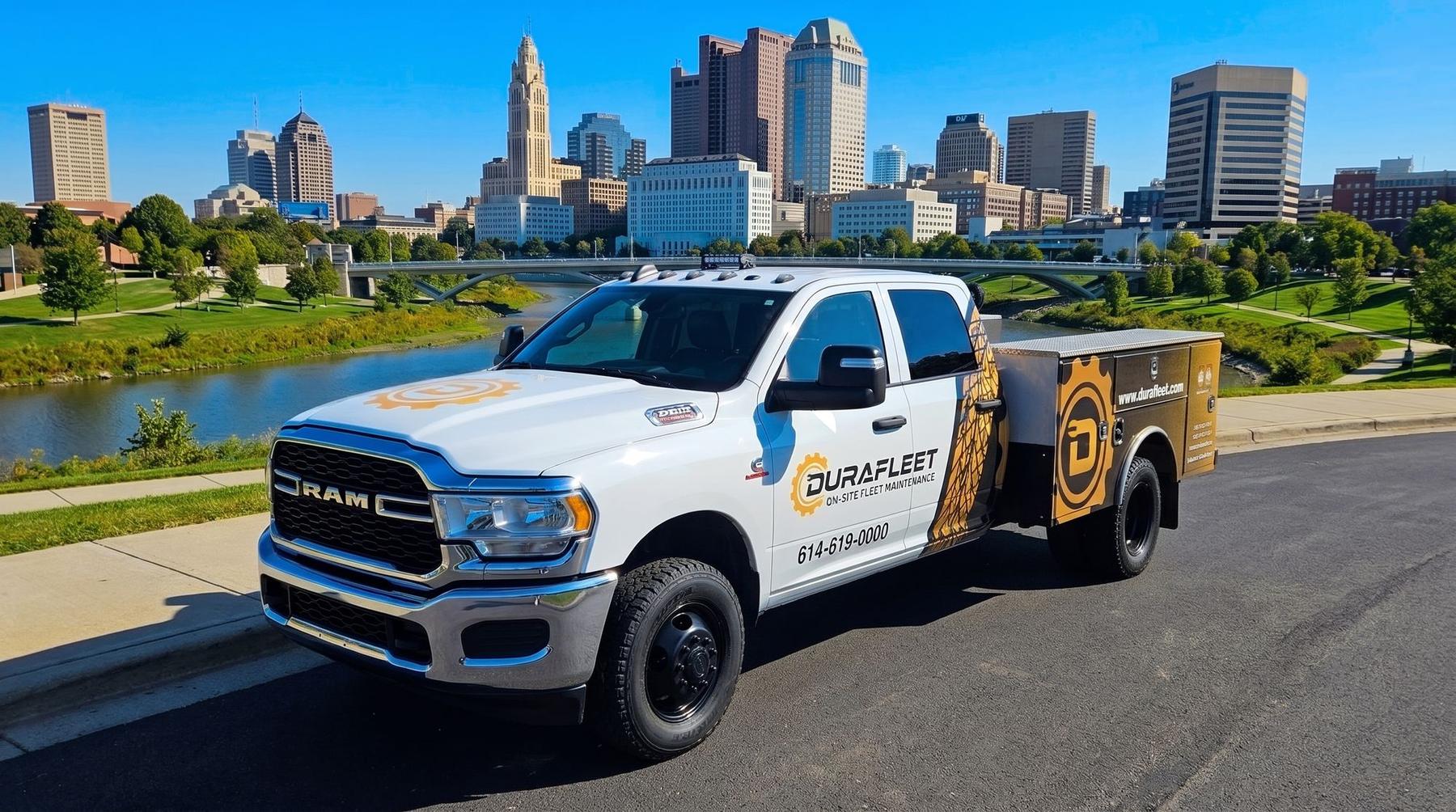
DuraFleet's purpose is to Make Control Easier. Roadside Mobile Assistance is one of the most direct ways we act on that purpose. When a commercial vehicle is disabled, fleet managers need more than a number to call. They need capable help, clear communication, and sound judgment about what comes next.
The DuraFleet Columbus team provides mobile roadside service for commercial fleets in Columbus and surrounding communities such as Grove City, Canal Winchester, Gahanna-area commercial corridors, and Whitehall, subject to vehicle location, service needs, and scheduling. We evaluate the problem, determine whether a safe on-site repair is possible, and set a clear next step when it is not. We do not promise that breakdowns will stop or that every vehicle can be fixed at the roadside. We do aim to make an unpredictable situation more manageable.
Start Building Your Loop
Is your team ready for the next roadside call, and the review that should follow it? Tell us about your fleet and where it operates, and we will help you put a practical plan in place.
Request service from DuraFleet Columbus
Anywhere Fleet Maintenance. Handled.