Picture a loaded box truck that loses power on a summer afternoon somewhere between Garland and Mesquite. The driver pulls over, the dispatcher's phone lights up, and a customer is waiting on a delivery that is not coming on time. The fault itself might be minor. The scramble around it usually is not.
That is why commercial truck roadside assistance in Dallas should be planned as a process, not handled as a one-off emergency. The goal is not just finding someone to show up. It is giving your team a clear way to stay safe, make good decisions quickly, and limit how far one stalled vehicle ripples through the day.
Commercial Truck Roadside Assistance in Dallas Starts With People, Not Parts
Most roadside delays come from confusion rather than mechanics. When nobody knows who calls whom, who approves the work, or who updates the customer, minutes turn into hours. Before the next breakdown, map out who owns each part of the response.
The driver
The driver's job is to get to the safest available spot, report the problem, and stay safe. Drivers should know your procedure for stopping, signaling, and asking for help. They should never be expected to diagnose or repair a vehicle in a dangerous setting. In Dallas summer heat, that includes staying out of exposed conditions longer than necessary.
Dispatch
Dispatch handles the interrupted assignment: rerouting loads, adjusting stops, and keeping customers informed. Separating this from the repair conversation keeps one person from juggling everything.
The fleet manager
The fleet manager decides on repairs, approves work, and determines whether replacement equipment or a tow is needed. Decide in advance who has authority to approve what, so the response does not stall waiting for a signature.
The service provider
The provider evaluates the vehicle, recommends the next step, and reports back. A good partner explains findings in plain terms and is honest when a repair cannot be done where the truck stopped.
Safety Comes Before Speed
If a vehicle is in a hazardous position or poses an immediate danger, emergency response takes priority over any maintenance arrangement. Fleet managers also need a way to judge whether a disabled truck can safely stay put while help is arranged. A fast response that skips the safety decisions is not actually fast. The right sequence is safety first, then a steady move toward a sound fix.
Give the First Call Enough to Work With
A report of "the truck died" leaves a lot of questions. Build a short checklist drivers can follow every time:
- Vehicle or unit number
- Exact location, including direction of travel and nearest cross street or exit
- What happened and what the driver noticed (no start, warning lights, leaks, overheating, unusual noise)
- Dashboard warnings or codes showing
- Whether the vehicle is loaded
- Any immediate safety concern
The point is not to turn drivers into technicians. It is to hand a qualified team enough information to choose the right response the first time.
Roadside Repair or a Tow?
Some problems can be diagnosed and fixed where the vehicle sits. Qualified mobile technicians may be able to handle certain mechanical or electrical issues, run diagnostics, and complete eligible repairs without moving the truck to a shop. That can save a tow and a lot of coordination.
Other failures need specialized equipment, a bigger repair, or a controlled shop environment. A risky location can also rule out roadside work. The decision should come from the technician's assessment, the repair itself, and safety, not from a wish to avoid a tow bill. The aim is the safest, most effective path back to service.
Keep Updates Meaningful
Once help is on the way, the fleet manager still needs to know where things stand. Has the request been accepted? Is a technician en route? What did the assessment find? Is a roadside fix realistic, or are parts, approvals, or a tow needed?
Updates should arrive when a decision depends on them, not as constant noise. When each next step has a clear owner, dispatch can plan around it and customers get honest expectations.
Use Each Breakdown to Sharpen Maintenance
After a significant roadside event, record the reported issue, the diagnosis, the repair, the downtime, and any follow-up. Over months, those notes show patterns: a unit with repeat events, the same failure across several trucks, or an inspection step that needs adjusting. Not every breakdown can be prevented, but understanding them helps cut the avoidable ones. Pairing roadside records with preventative maintenance closes that loop.
How DuraFleet Dallas Supports the Plan
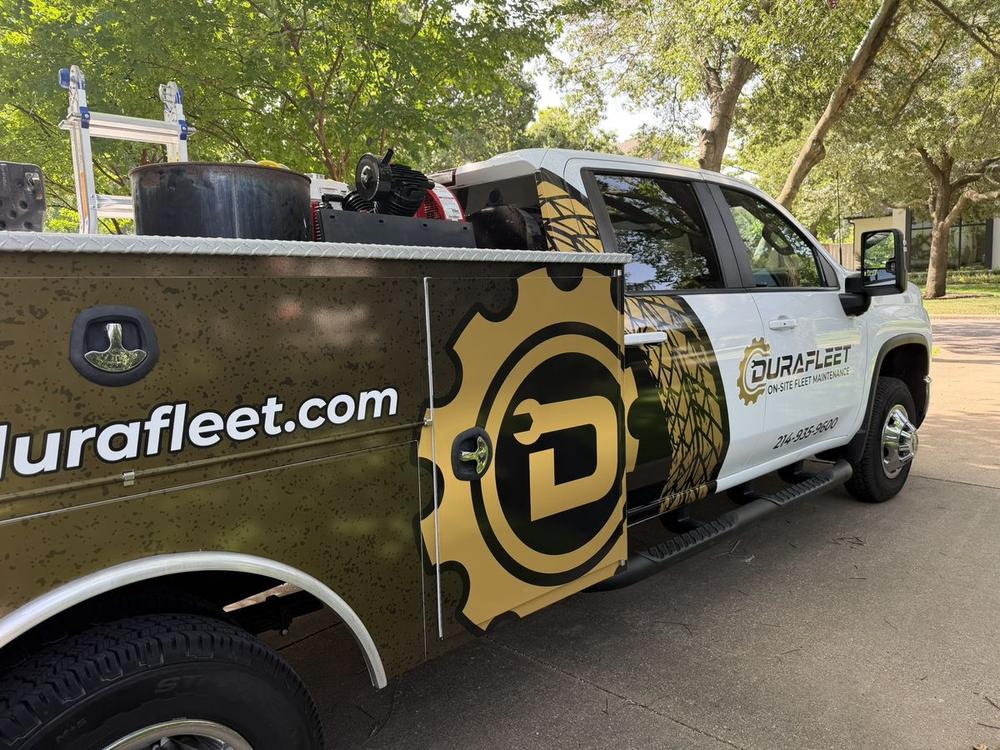
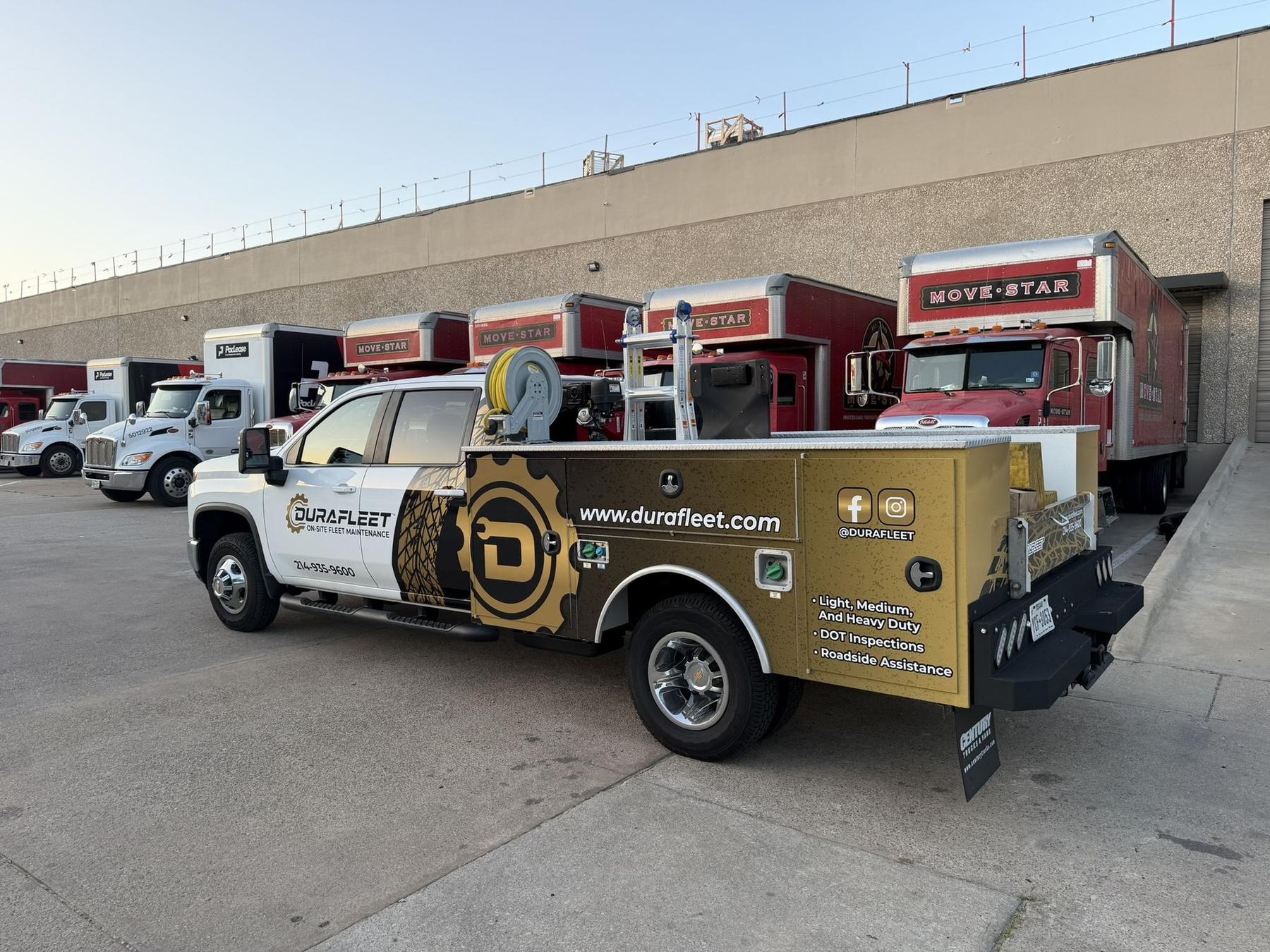
Our purpose is to Make Control Easier, and Roadside Mobile Assistance is one of the clearest ways we act on it. DuraFleet Dallas provides roadside assistance for eligible commercial vehicles across our service area, including Richardson, Farmers Branch, Balch Springs, and the Love Field corridor. We assess the reported issue, say plainly whether a safe on-site repair makes sense, and explain next steps if a shop or tow is the better call.
We cannot promise breakdowns will never happen or that every truck can be fixed on the spot. We can help your team respond with more preparation and less guesswork.
Anywhere Fleet Maintenance. Handled.
Get Your Dallas Roadside Plan in Place
If one of your trucks stopped today, would everyone know their role? Tell us about your fleet and routes, and our Dallas team will talk through your roadside and maintenance needs. Request service from DuraFleet Dallas.