When a fleet manager weighs mobile fleet maintenance in Dallas against a trip to the shop, the first number on the table is almost always the quote. That makes sense. Budgets are real, and nobody wants to overpay for a service interval or a brake job. But a quote only describes what happens once a technician starts working. It says nothing about the miles, hours, and phone calls it took to get the truck there and back.
For fleets running delivery and service routes across Dallas, Richardson, Garland, and Mesquite, those hidden pieces add up. Our Dallas team suggests five questions for comparing the two service models by total operational cost instead of the single line on an invoice.
Question 1: What Are You Paying for the Work Itself?
Parts, labor, diagnostic time, and any trip or service fees form the visible layer. Mobile pricing may be structured differently from a shop's, and a facility may be the better value for jobs that need several technicians or heavy equipment. Compare these openly. Just remember that the cheapest quote and the cheapest outcome are not always the same thing.
Question 2: Who Gets the Truck There and Back?
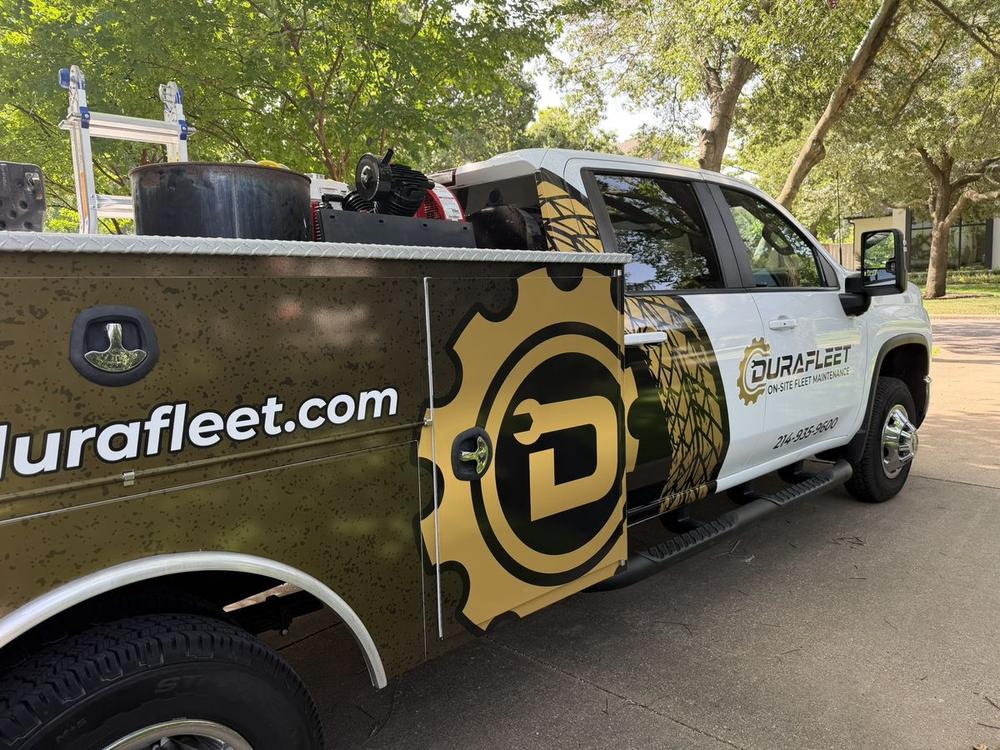
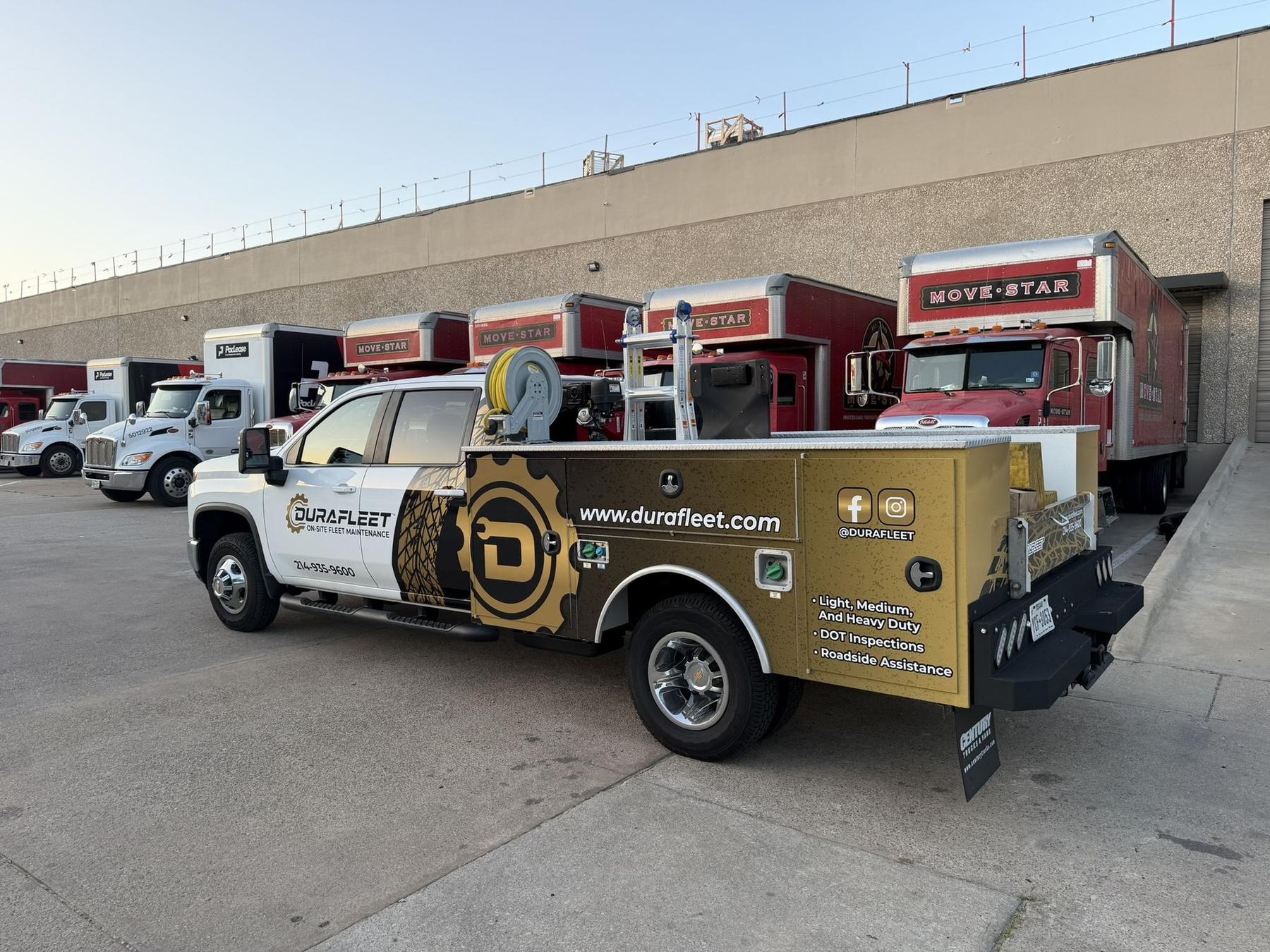
Every shop visit needs someone to drive the vehicle over and someone to bring it home. That could be the assigned driver, a second employee, or paid transport. Each trip burns fuel, adds mileage, and uses paid hours. Mobile service skips that step for eligible work by going to where the vehicle already sits: a yard in Farmers Branch, a facility along the Love Field corridor, a job site in Rowlett.
A hypothetical Dallas example
Here is a simple illustration using made-up numbers. Picture a Dallas fleet of 35 vehicles, each needing four shop visits per year. Suppose each round trip to the shop uses 2.5 employee-hours, and the fully burdened labor cost is $34 per hour.
35 vehicles × 4 visits × 2.5 hours × $34 = $11,900
That is $11,900 a year in staff time spent moving trucks, before fuel, mileage, or any knock-on effect on routes. The figures are invented for illustration only. The point is that this cost exists in most fleets and rarely gets tracked. When eligible work happens at the fleet's own location, much of that number can shrink or go away.
Question 3: How Long Is the Vehicle Really Off the Road?
Two hours of wrench time rarely equals two hours off the road. Drop-off windows, waiting for an open bay, approval calls, and pickup all stretch the gap, and heavy Dallas traffic can stretch it further. Mobile service can shrink that gap by working where the truck is parked and by fitting into slower parts of the schedule. It will not erase downtime entirely. The vehicle still has to be made available, and some work still needs a facility.
Question 4: How Much Management Time Sits Behind Each Appointment?
Someone books the slot, briefs the driver, approves the repair, tracks status, and confirms the work is finished. Those tasks spread across managers, dispatchers, and office staff, and that time has a cost. A provider that communicates clearly can lighten the load. A disorganized one, mobile or not, adds to it.
Question 5: Can the Job Be Done Right Outside a Shop?
Repair shops are not the problem here. A well-equipped facility offers lifts, specialized tooling, controlled conditions, and enough bays and people for heavy or complex jobs. Some work belongs there, period.
Many preventive tasks, inspections, diagnostics, and eligible repairs fit mobile service well. Others need a controlled environment or equipment that only a shop has. Forcing the wrong job into a parking lot can cost more and take longer. Doing it correctly and safely matters more than doing it on-site. Neither model wins every time; the useful question is which one fits the specific job in front of you.
A Formula to Run on Your Own Numbers
To turn the five answers into one comparison, try this:
Total operational maintenance cost = direct service cost + transportation cost + coordination cost + added operational disruption
Plug in your fleet's actual figures for each piece. Be careful not to count the same dollars twice. If driver wages already sit in the transportation line, do not add them again as lost productivity unless there is a separate, measurable loss.
The formula will not always favor mobile service. It will make the decision clearer.
Mobile Fleet Maintenance in Dallas, Matched to the Job
Our purpose is to Make Control Easier. For a Dallas operation, that means looking beyond single repair tickets to how maintenance affects routes, drivers, and customers across the week. DuraFleet Dallas brings preventative maintenance, computer diagnostics, DOT inspections, and eligible repairs to yards and facilities from Plano and Addison down to Hutchins and Wilmer. When a job truly needs a shop, we will tell you. The aim is to pair each task with the right setting, not to push everything into one model.
The best maintenance decision is not always the lowest invoice. It is dependable work at the lowest practical total cost to your operation.
Anywhere Fleet Maintenance. Handled.
Talk With Our Dallas Team
Are you comparing prices, or comparing total costs? Tell us what you run and where it parks, and we will help sort out which services make sense at your location. Request service from DuraFleet Dallas.